Bulk Towels
Pet Towels Wholesale
Pet towels wholesale — grooming towels and microfibre pet towels for salons, vets and pet brands.
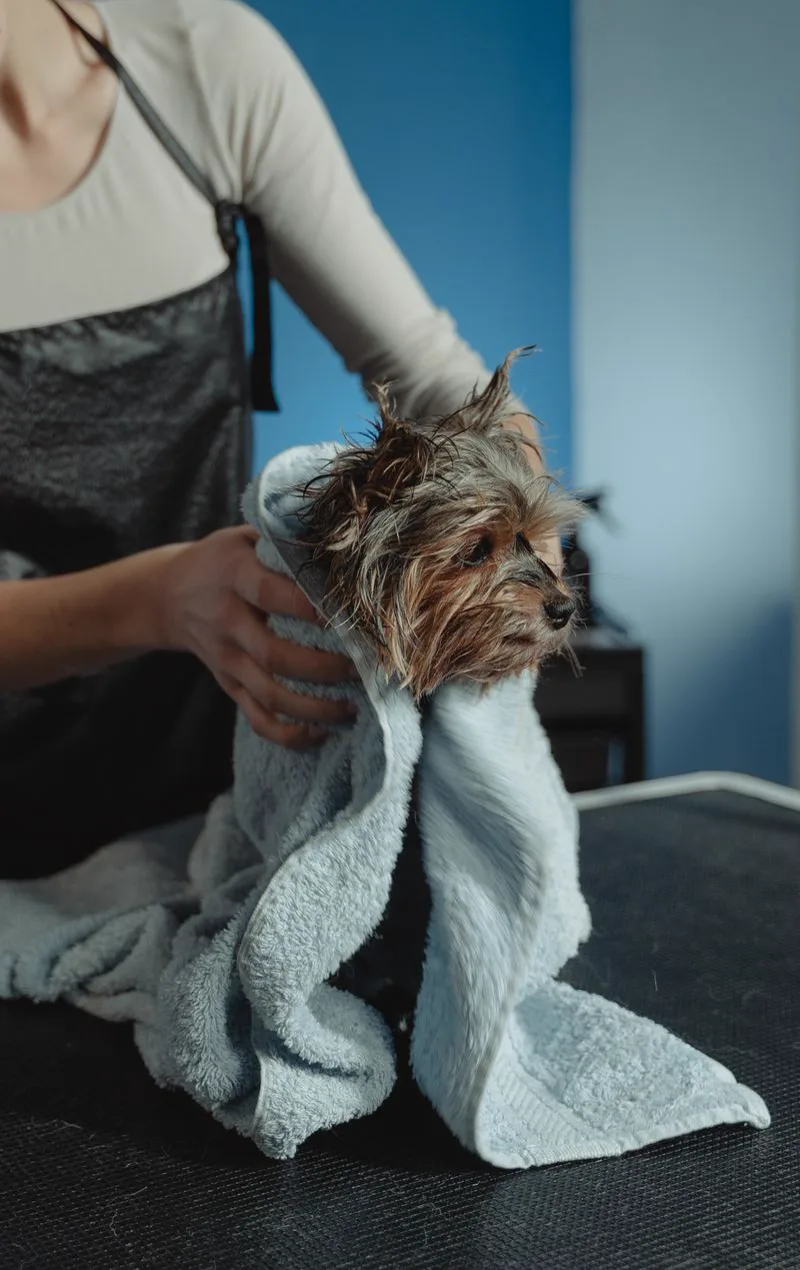
A pet towel is judged on how much water it takes out of fur. That is a harder job than drying skin: a wet coat holds a great deal of water, the towel is used over a large and moving animal, and it is often used on a dog that would rather it were not being used at all.
That makes absorbency per gram the number that matters rather than hand feel. A grooming salon wants a towel that takes the most water out of a coat with the fewest passes, because the drying time is the service time and the animal is more comfortable when it is over.
HotelsLinen manufactures pet towels wholesale to a written specification from 500 pieces per style and colour — grooming towels in cotton and cotton-rich terry, microfibre pet towels, and the hooded and wrap formats used for small animals. Buyers fix the fabric, the weight, the size, the colour and the branding.
The buyers are grooming salons and mobile groomers, veterinary practices and animal hospitals, boarding kennels and day care, pet retailers and pet brands, animal shelters and rescue organisations, and distributors supplying any of those. Grooming towels are a fast-cycle consumable, and a busy salon goes through them in volume.
Microfibre has become the default for grooming because it takes up water fast, dries quickly and packs small, which suits a mobile groomer or a salon running several animals an hour. Cotton terry is still used where a softer, more familiar feel is wanted, particularly for small or nervous animals and for finishing work.
Size is decided by the animal rather than by a standard. A small towel for faces, paws and small breeds, a larger one for medium dogs, and a large one for big breeds and for wrapping a wet animal while it is moved. A salon usually holds at least two sizes, and the quantities are not proportional to the sizes.
Colour is often about hygiene rather than appearance in this category. A towel used on the face should be kept apart from one used on the rear, and a towel used on a possibly infectious animal should be identifiable. Colour coding costs nothing at the order stage and is how most salons manage it.
Our factory is in the Nantong Home Textile Zone in Jiangsu, China. Orders start at 500 pieces per style and colour with a typical four-week lead time after the sample and specification are approved.
Absorbency per gram is the number that matters
Why a wet coat is a harder job
Fur holds far more water than skin, and the towel is being used over a large, curved and moving surface. That means the useful measure is how much water the towel takes up per gram of towel, not how it feels in the hand. It is the reason microfibre has displaced terry in most grooming salons.
Microfibre for speed
Microfibre takes up water quickly, releases it quickly when washed and dries fast between uses, which is what a salon running several animals an hour needs. It must be washed warm without fabric softener, which permanently blocks the pickup that makes it work.
Cotton terry for comfort and finish
Cotton feels softer and more familiar against an animal, which matters for small breeds, puppies and nervous animals, and it is often used for face and finishing work. It absorbs well but holds more water and dries more slowly than microfibre.
What a grooming towel has to survive
Frequent washing at a high temperature, animal hair that clogs a machine filter, and sometimes disinfectant chemistry. Colour fastness matters because grooming towels are usually washed together and often with strong detergent, and a towel that bleeds will tint the rest of the load.
Pet towel specification reference
| Item | Common size | Common construction | Notes |
|---|---|---|---|
| Small grooming towel | 30 x 50 cm | Microfibre or cotton terry | Faces, paws and small breeds |
| Medium grooming towel | 40 x 60 cm | Microfibre | The general-purpose salon size |
| Large grooming towel | 50 x 90 cm or larger | Microfibre or cotton terry | Big breeds and wrapping a wet animal |
| Hooded pet towel | To size | Cotton terry | Small animals and drying heads |
| Fibre | — | — | Microfibre · cotton · cotton-rich blends |
| Colour | — | — | Colour-coded per use; fastness matters as they wash together |
| Edge | — | — | Overlocked or edgeless depending on the finish required |
| Branding | — | — | Woven label; usually kept off the working face |
| Packing | — | — | Bulk for salons; retail packing for pet brands |
| MOQ | — | — | 500 pieces per style and colour |
Sizes, uses and colour coding
Sizes follow the animal
A salon usually holds at least two sizes: a small towel for faces, paws and small breeds, and a large one for medium and big dogs or for wrapping a wet animal while it is moved to a drying table. The quantities are not proportional to the sizes, because the small towel is used far more often.
Colour for hygiene, not decoration
A towel used on the face should be kept apart from one used on the rear, and a towel used on a possibly infectious animal should be identifiable. Colour coding is how most salons manage it, and it costs nothing at the order stage but is difficult to impose on an existing stock of identical towels.
Hooded and wrap formats
For small animals a hooded towel or a wrap is easier to keep in place than a flat one, and it reduces how much the animal has to be handled. It is the same construction logic as a baby hooded towel, applied to a different user.
Where the towel is sold rather than used
Pet brands sell grooming towels at retail, and a retail pet towel is usually specified as its own product: a lighter weight, a more visible brand placement and retail packing, often with a pouch. It is the same argument as a spa selling its peshtemal.
Colour fastness and the wash
Why fastness matters more here
Grooming towels are washed together, often with strong detergent and at a high temperature, and animal hair in the drum acts as an abrasive. A towel that bleeds will tint the rest of the load, which is why colour fastness is worth specifying rather than assuming.
Hair in the machine
Animal hair collects in filters, pumps and drums and is a maintenance issue as much as a linen one. A mesh wash bag or a separate grooming load keeps hair out of the general linen wash and is worth planning rather than discovering.
No softener on microfibre
The single most common reason a grooming towel stops working is fabric softener, which coats the fibres and blocks the capillary pickup permanently. It is worth saying this to a salon directly, because the towel gets blamed for a wash process problem.
What to send for a quotation
The animal sizes the salon handles, the sizes and quantities required, the fabric, whether the towels are washed with strong detergent, the colour coding wanted, and whether a retail version is also needed. The size mix and the colour coding are usually the two answers that shape the order.
What You Get
Why Source Pet Towels Wholesale From HotelsLinen
Microfibre for speed
Takes water out of a coat fast, dries between uses and packs small, which suits a salon running several animals an hour and a mobile groomer working from a van.
Cotton terry for comfort
A softer, more familiar feel for small breeds, puppies and nervous animals, and for face and finishing work where microfibre feels wrong.
Sizes that follow the animal
A small towel for faces, paws and small breeds and a large one for big dogs and wrapping a wet animal, in the proportions a salon actually uses them.
Colour coding for hygiene
Separate colours for separate uses, because a towel used on the face should not be the towel used on the rear and colour is the cheapest control in a busy salon.
Colour fastness specified
Grooming towels are washed together with strong detergent and animal hair in the drum, so a towel that bleeds tints the whole load.
Hooded and wrap formats
For small animals, a hooded or wrap format stays in place with less handling than a flat towel.
Retail pet towels
A lighter weight with a visible brand placement and retail packing for pet brands, specified as its own product rather than as salon stock in smaller quantities.
Factory-direct tiered pricing
Quoted from the Nantong Home Textile Zone with 500-piece MOQ per style and colour and improving tiers above it.
Custom Manufacturing
Send your spec or sample and we make it to order with consistent quality at scale.
Custom Branding
Embroidered, woven-label and printed logos, plus private label packaging.
Factory-Direct MOQ
Start from 500 pieces per style and color, with a typical 4-week lead time.
FAQ
Common Questions
What is the MOQ for pet towels wholesale?
Our standard minimum is 500 pieces per style and colour. Grooming salons normally order two or three sizes together, and where colour coding is used each colour is a separate line that can be combined in one order.
Microfibre or cotton for pet towels?
Microfibre takes water out of a coat faster, dries between uses and packs small, which suits a salon running several animals an hour. Cotton terry feels softer and more familiar against an animal, which matters for small breeds and nervous animals, and is often used for face and finishing work. Many salons run both.
What size pet towel should I order?
A small towel of around 30 x 50 cm for faces, paws and small breeds, a medium 40 x 60 cm as the general salon size, and a large 50 x 90 cm or bigger for large breeds and for wrapping a wet animal. Salons usually hold at least two sizes, with the small one used far more often.
Why did my microfibre pet towels stop absorbing?
Almost always fabric softener, which coats the fibres and permanently blocks the capillary pickup that makes microfibre work. High temperature and bleach also accelerate the loss. Wash warm, mild detergent, no softener, no bleach, and keep microfibre separate from cotton.
Should grooming towels be colour-coded?
Yes, and it is usually about hygiene rather than appearance. A towel used on the face should be kept apart from one used on the rear, and a towel used on a possibly infectious animal should be identifiable. It costs nothing at the order stage and is difficult to impose on an existing stock of identical towels.
Why does colour fastness matter for pet towels?
Because grooming towels are washed together, often with strong detergent at a high temperature, and animal hair in the drum acts as an abrasive. A towel that bleeds will tint the rest of the load, so fastness is worth specifying rather than assuming.
Do you make hooded pet towels?
Yes. A hooded or wrap format is easier to keep in place on a small animal than a flat towel and reduces how much the animal has to be handled, which is the same construction logic as a baby hooded towel applied to a different user.
Do you supply pet towels for retail?
Yes. A retail pet towel is normally specified as its own product — a lighter weight, a more visible brand placement and retail packing, often with a pouch — rather than as salon stock in smaller quantities.
How should grooming towels be washed?
Warm to hot with a mild detergent, and microfibre without softener or bleach. Animal hair collects in machine filters, pumps and drums, so a mesh wash bag or a separate grooming load keeps hair out of the general linen wash.
What is the lead time?
About four weeks after the sample and specification are approved. Dyeing for colour-coded sets and any branding or packing are the steps most likely to move the date.
Keep Exploring
Related Products
Bath Towels Wholesale
Bath towels wholesale and bulk bath towels made to order for hotels, resorts, spas and distributors.
View →
Hand Towels Wholesale
Hand towels wholesale — hotel bathroom and washroom hand towels, matched to your towel specification.
View →
Bath Sheets Wholesale
Bath sheets wholesale — oversized bath towels for suites, spas and upscale bathrooms, made to order.
View →Need a Quote on Pet Towels Wholesale?
Tell us your target quantity, fiber and branding — we respond within 24 hours.
Get a Quote