Bulk Towels
Turkish Cotton Towels Wholesale
Turkish cotton towels wholesale — long-staple terry and peshtemal towels for hotels, spas and brands.
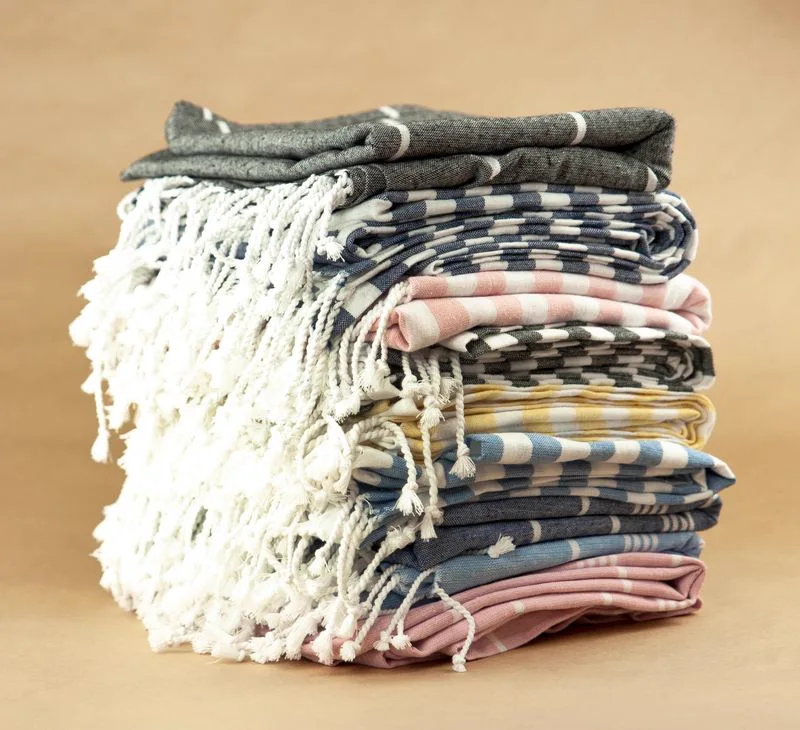
Turkish cotton is a fibre description, not a brand and not a guarantee. What makes it different is staple length: the individual cotton fibres grown in the Aegean region are longer than standard upland cotton, and longer fibres can be spun into a finer, stronger yarn with fewer fibre ends reaching the surface of the cloth.
That has two visible consequences. The towel feels smoother, because there are fewer loose ends against the skin. And it sheds less lint, because lint is fibre ends coming off. It also spins into a lighter, stronger yarn, which is why Turkish cotton is the fibre behind the peshtemal — the flat-woven, lightweight towel that dries in a fraction of the time a terry towel takes.
HotelsLinen manufactures Turkish cotton towels wholesale to a written specification from 500 pieces per style and colour — terry towels in the guest and suite weights, and flat-woven peshtemals, hammam towels and towel wraps. Buyers fix the construction, the weight, the size, the weave and the branding.
The buyers are hotels and resorts, spas and hammams, wellness and boutique properties, swimwear and lifestyle brands, and distributors supplying any of those. Turkish cotton is usually bought for one of two reasons: a softer, lower-lint terry towel for guest use, or a lightweight peshtemal for spa, pool and travel applications.
The label is where this category gets confusing, because "Turkish cotton" is used loosely. Cotton can be grown in Turkey and spun and woven anywhere; a towel can be woven in Turkey from imported fibre; and a towel can be called Turkish-style on the strength of its weave alone. None of those tells the buyer what the staple length is, and staple length is what they are paying for.
The workable way to specify it is by the properties that follow from staple length rather than by the name: yarn count, ply, weight and the finish. A single-ply fine yarn in a long-staple cotton behaves very differently from a two-ply coarser yarn, and the two can carry the same label.
Turkish cotton and Egyptian cotton are often presented as rivals and are more alike than the marketing suggests: both are long-staple, and the practical difference between a good Turkish towel and a good Egyptian towel is usually smaller than the difference between two Turkish towels from different mills. What matters is the specification behind the name.
Our factory is in the Nantong Home Textile Zone in Jiangsu, China, with weaving, dyeing, cutting, hemming and fringing in one supply chain. Orders start at 500 pieces per style and colour with a typical four-week lead time after the sample and specification are approved.
What actually makes Turkish cotton different
The difference is measurable in the fibre before anything is woven, which is why it cannot be added at the finishing stage.
Staple length
Cotton fibres are graded partly by length. Longer fibres can be spun into a finer yarn with fewer joins and fewer protruding ends. That is the entire basis of the softness and the low lint, and it is why a towel made from short fibres cannot be finished into behaving like one made from long fibres.
Where it grows and how it spins
The Aegean growing region produces the long-staple cotton the name refers to. How it is spun matters as much as where it was grown: a combed, ring-spun long-staple yarn behaves very differently from a carded or open-end yarn of the same fibre, and both can end up in towels sold under the same description.
Why it suits the peshtemal
Long-staple cotton spins into a fine, strong yarn, which is what allows a flat-woven towel to be light and still hold together. A peshtemal is woven rather than looped, dries very quickly and packs small — properties that follow from the fibre and the weave together, not from the fibre alone.
Turkish cotton towel specification reference
The constructions we build most often. The specification is given by yarn, ply and weight rather than by the fibre name alone.
| Item | Common size | Construction | Notes |
|---|---|---|---|
| Guest terry towel | 70 x 140 cm | Long-staple, ring-spun | Softer hand and less lint than standard cotton |
| Suite and spa towel | 100 x 150 cm | Long-staple, heavier weight | Where the hand feel is the selling point |
| Peshtemal / hammam towel | 90 x 170 cm or 100 x 180 cm | Flat woven, fringed | Dries fast, packs small, light |
| Towel wrap | To specification | Flat woven with fastening | Spa, pool and changing use |
| Yarn | — | Single or two-ply | Ply changes weight, durability and hand |
| Weight | — | Terry 450–700 GSM; peshtemal much lighter | Terry and flat weave are not comparable by GSM |
| Edge | — | Hemmed or fringed and knotted | Fringing suits flat weave; not for heavy laundering |
| Branding | — | Embroidery · woven label · print | Placement confirmed on the sample |
| MOQ | — | — | 500 pieces per style and colour |
| Lead time | — | — | About 4 weeks after sample approval |
Turkish against Egyptian cotton
Often presented as rivals, more alike than the marketing suggests.
The differences that matter
Both are long-staple cottons and both produce a smoother, lower-lint towel than standard upland cotton. The practical difference between a well-specified Turkish towel and a well-specified Egyptian towel is usually smaller than the difference between two towels made from the same fibre by different mills, at different yarn counts, with different finishing.
What the label does not tell you
It does not tell you the staple length, the yarn count, the ply, the weight or the finish. Two towels can both be described as Turkish cotton and differ by a factor of two in yarn fineness and by a noticeable amount in durability. That is why a specification is worth more than a grade name.
How to specify it properly
Ask for the construction: fibre description, yarn count, ply, weight in GSM for terry or grams per piece for flat weave, and the finish. Confirm it on a physical sample that has been washed, because the hand feel of a long-staple towel improves after the first wash as the yarn relaxes, and a sample straight off the loom understates it.
Where Turkish cotton earns its price
It is not the right fibre for every towel in a property.
Guest towels and face cloths
This is where the difference is felt, because the towel is against skin. On a face cloth the effect of fewer fibre ends is obvious, and it is the item a guest handles most closely. Upgrading only the face cloth and the guest towel is a common and sensible way to buy the benefit without buying it for the whole property.
Spas, hammams and wellness
Spa settings specify it routinely, both for the terry towel the client lies on and for the peshtemal. A peshtemal in long-staple cotton is light, dries fast and takes a woven or embroidered brand well, which suits a retail or take-home programme alongside the treatment rooms.
Where standard cotton is the better buy
Utility towels — pool, gym, housekeeping, bar and kitchen — are washed harder and replaced sooner, and the guest never handles them closely. Paying a long-staple premium for those is paying for a property nobody is judging. Specify standard cotton there and put the budget into the guest-facing items.
What You Get
Why Source Turkish Cotton Towels Wholesale From HotelsLinen
Long-staple, ring-spun yarn
Fewer fibre ends at the surface, which is what produces the softer hand and the lower lint rather than the fibre name on its own.
Specified by construction
Yarn count, ply, weight and finish given explicitly, so two quotations can actually be compared and a re-order can be repeated.
Terry and flat weave
Guest and suite terry towels in the heavier weights, plus peshtemal, hammam and towel wraps in flat weave.
Peshtemal that packs small
A flat-woven towel that dries in a fraction of the time a terry towel takes and folds down to a fraction of the space.
Sample washed before approval
Long-staple towel hand feel improves after the first wash, so the sample is assessed washed rather than straight off the loom.
Branding for retail and take-home
Embroidery, woven labels and printing on a towel designed to be carried home from a spa as much as used in it.
Fringing where it belongs
Fringed and knotted edges for flat-woven spa towels, and clean hemming for anything going into a commercial laundry.
Factory-direct tiered pricing
Quoted from the Nantong Home Textile Zone with 500-piece MOQ per style and colour and improving tiers above it.
Custom Manufacturing
Send your spec or sample and we make it to order with consistent quality at scale.
Custom Branding
Embroidered, woven-label and printed logos, plus private label packaging.
Factory-Direct MOQ
Start from 500 pieces per style and color, with a typical 4-week lead time.
FAQ
Common Questions
What is the MOQ for Turkish cotton towels wholesale?
Our standard minimum is 500 pieces per style and colour. Programmes that combine a guest terry towel with a peshtemal or a towel wrap can be combined once the specification is agreed.
What makes Turkish cotton different from ordinary cotton?
Staple length. The fibres are longer, so they spin into a finer, stronger yarn with fewer protruding ends. That produces a smoother hand and less lint. It is a fibre property that cannot be added at the finishing stage, which is why a short-staple towel cannot be finished into behaving like a long-staple one.
Is Turkish cotton better than Egyptian cotton?
Both are long-staple and both give a smoother, lower-lint towel than standard cotton. In practice the difference between a well-specified Turkish towel and a well-specified Egyptian towel is usually smaller than the difference between two towels of the same fibre from different mills at different yarn counts.
What is a peshtemal?
A flat-woven Turkish towel, traditionally fringed, that dries far faster than a terry towel and packs much smaller. It is woven rather than looped, so it is lighter and less bulky. Peshtemals are common in spas, hammams, pools and travel, and they take a woven or embroidered brand well.
How do I specify Turkish cotton properly?
By construction rather than by name: fibre description, yarn count, ply, weight (GSM for terry, grams per piece for flat weave) and finish. The label alone does not tell you any of those, and two towels described as Turkish cotton can differ substantially in fineness and durability.
Why does the towel feel better after washing?
Because the yarn relaxes and the pile opens up. A long-staple towel straight off the loom understates how it will feel in use, which is why a sample should be assessed after a wash rather than as received.
Is Turkish cotton worth it for every towel in a hotel?
Usually not. It earns its price on guest-facing items — the guest towel and especially the face cloth, which is handled most closely. Utility towels for the pool, gym, kitchen and housekeeping are washed harder, replaced sooner and never handled closely, so standard cotton is the better buy there.
Can Turkish cotton towels be laundered industrially?
Yes, in terry constructions with hemmed edges. Flat-woven peshtemals with fringed edges are not suited to heavy commercial laundering, because the fringe frays and tangles. That is worth settling at the specification stage rather than after the first wash.
Can you put our brand on a peshtemal?
Yes. Woven labels, embroidery and printing are all available, and peshtemals are often branded for a retail or take-home programme alongside spa use.
What is the lead time?
About four weeks after the sample and specification are approved. Dyeing, fringing and any branding are the steps most likely to move the date.
Keep Exploring
Related Products

Cotton Towels Wholesale
Cotton towels wholesale — bulk cotton terry towels made to your yarn, weight and shade specification.
View →
Egyptian Cotton Towels Wholesale
Egyptian cotton towels wholesale — extra-long staple terry towels for hotels, spas and retail brands.
View →
Bamboo Towels Wholesale
Bamboo towels wholesale — bamboo viscose and bamboo-cotton towels for spas, hotels and retail brands.
View →Need a Quote on Turkish Cotton Towels Wholesale?
Tell us your target quantity, fiber and branding — we respond within 24 hours.
Get a Quote